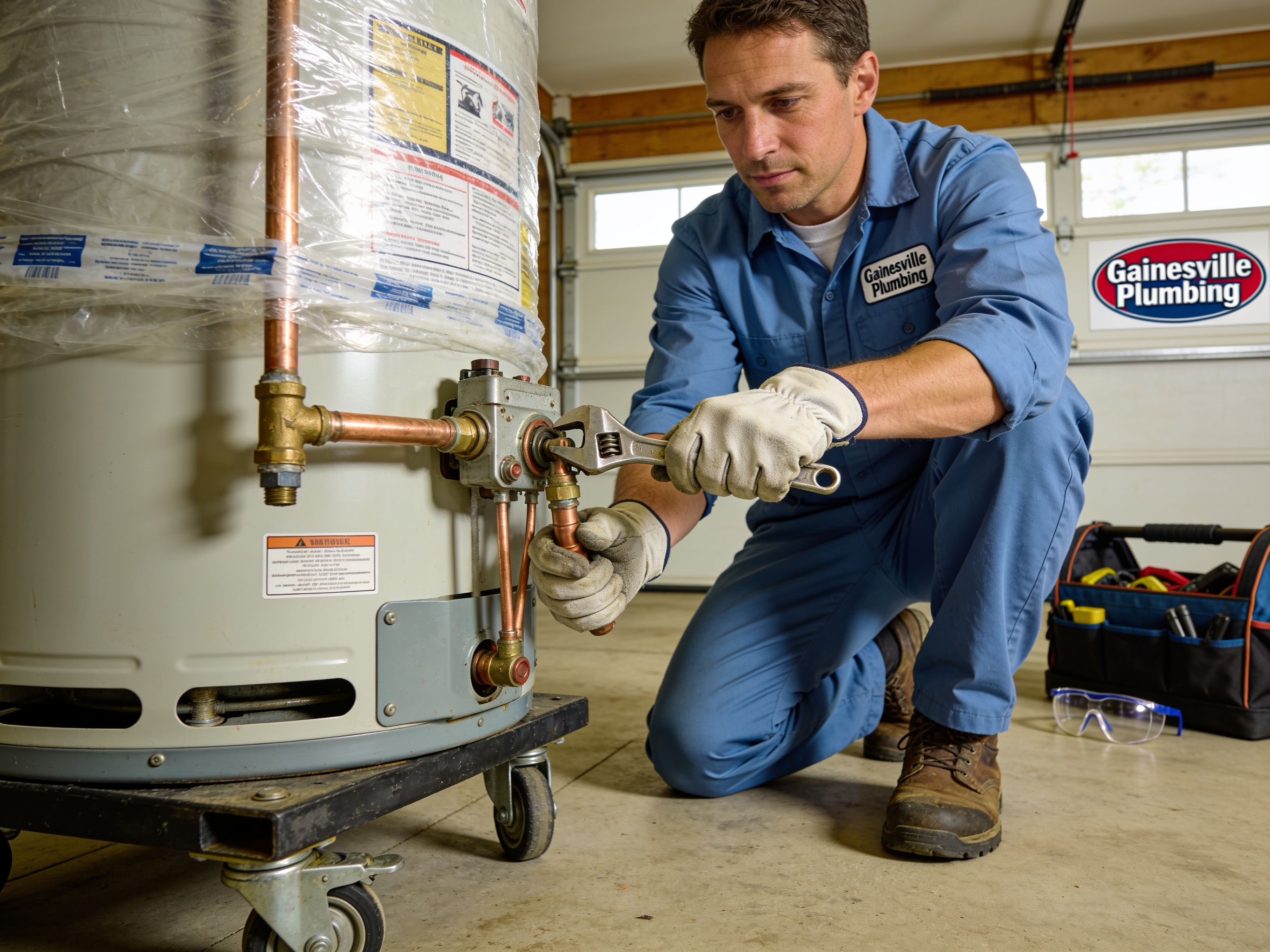
In Gainesville's humid subtropical climate, water heaters face accelerated corrosion from high humidity and mineral-rich groundwater common across Alachua County. Homes built before the 1980s in Duckpond and University Heights often have original units with sediment buildup that shortens lifespan, especially when mild winters allow year-round use without the protective effects of colder northern climates. Replacement involves selecting units sized for family demand while accounting for tight utility closets typical in these neighborhoods.
Electric and gas models each present distinct challenges here. Electric replacements require verifying 240-volt circuits in older Northwest Gainesville properties, while gas units demand proper venting to avoid issues near Paynes Prairie where soil moisture can affect exhaust routing. Tankless options suit compact spaces in Haile Plantation but need adequate gas line upgrades, something local plumbers assess before removal of the old tank to prevent code violations during final inspection.
Edge cases include homes near the University of Florida where high occupancy increases hot water demand, pushing systems harder during summer peaks. Replacement crews must navigate narrow access paths in Magnolia Park bungalows and ensure seismic strapping even in Florida's mild conditions. Proper disposal of old units follows Alachua County guidelines to avoid environmental runoff into local waterways.
Technician insight
In Gainesville, the thing that catches most people out with Water Heater Replacement is the hard water sediment that packs into the bottom of tanks in Duckpond and Magnolia Park homes, making removal far messier and slower than homeowners expect when the unit has sat for fifteen-plus years.
Inconsistent Hot Water in Northwest Gainesville
A homeowner in a 1970s house near 4604 NW 6th St reported lukewarm showers and a small leak. Inspection showed heavy sediment blocking the dip tube and a corroded tank bottom. The old unit was removed, lines flushed, and a new 50-gallon electric model installed with updated shutoff valves and proper strapping. Hot water returned consistently without further leaks.
How it works
- 1
Site Inspection
Technician evaluates the existing unit, piping, venting, and electrical or gas supply at the Gainesville address while noting space constraints common in Duckpond and University Heights homes.
- 2
Unit Selection and Quote
Recommend tank or tankless model matched to household size and fuel type, then provide upfront pricing based on access, venting needs, and any line upgrades required in Alachua County properties.
- 3
Old Unit Removal
Safely drain and disconnect the heater, handling sediment-heavy units from long-term Gainesville use and preparing the area for new installation without disturbing nearby structures.
- 4
New Installation and Testing
Set the replacement, connect all lines, verify combustion or electrical function, and confirm hot water delivery meets local codes before leaving the site.
Pricing
Upfront quotes provided after on-site inspection; final cost depends on unit type, access difficulty, and any required line or venting modifications.