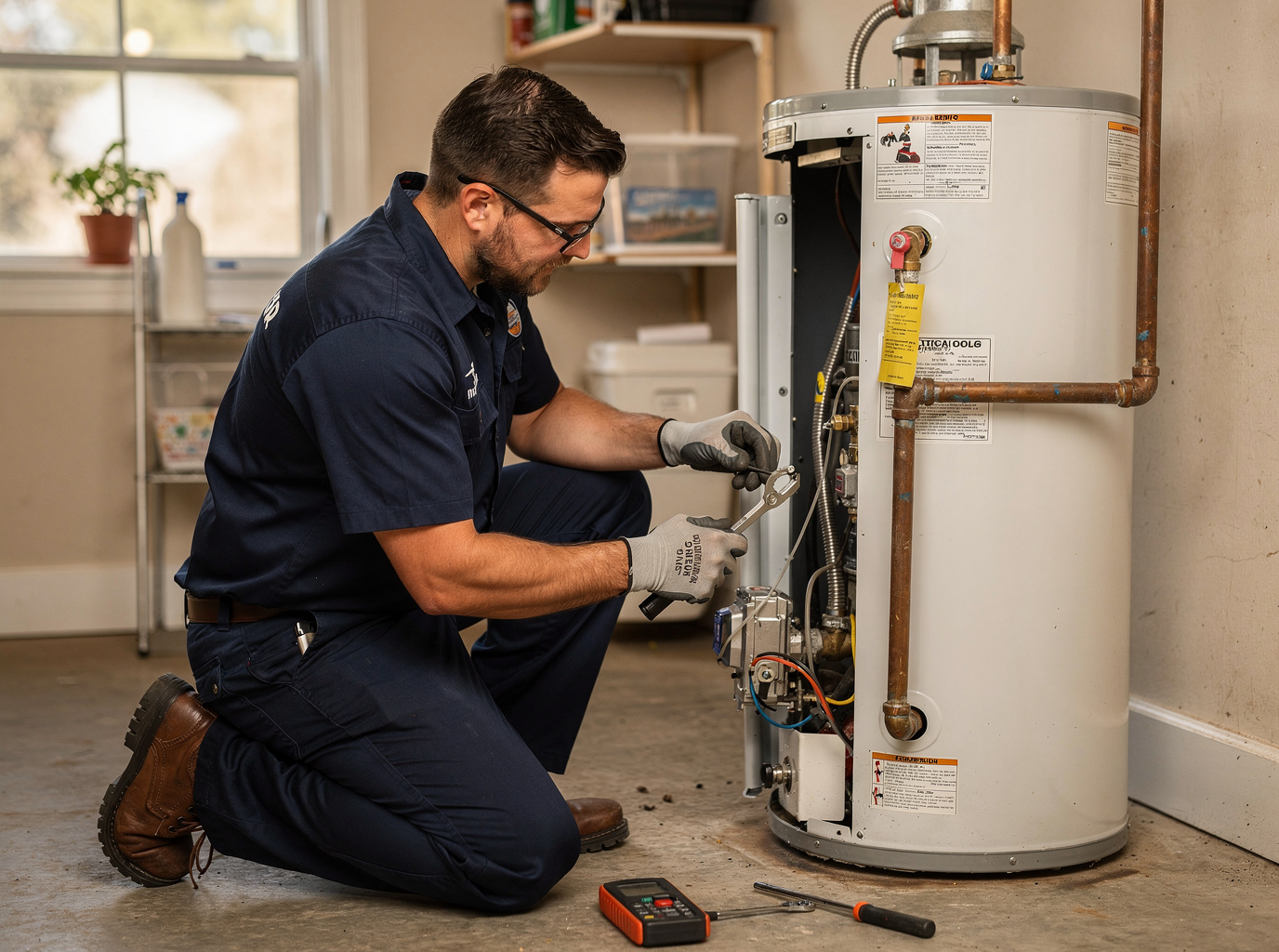
Gainesville homes in neighborhoods like Duckpond and University Heights often feature water heaters installed decades ago that now face accelerated corrosion from the area's humid subtropical climate. Hot summers increase tank pressure and sediment movement while mild winters mask slow leaks until they become noticeable near foundations. Plumbers working these jobs routinely check anode rods and venting on both gas and electric units because Alachua County water chemistry leaves mineral deposits that shorten element and valve life.
Repair calls frequently originate from Magnolia Park and Northwest Gainesville where compact lots and older plumbing runs make access tight. Technicians must account for proximity to the Florida Museum of Natural History area and Paynes Prairie Preserve State Park, where soil moisture levels stay elevated year-round. This environment speeds exterior rust on tanks and requires careful inspection of temperature-pressure relief valves before any reassembly to meet local code expectations.
Service in nearby Lake City and Ocala corridors shows the same pattern of electric element failures during peak summer demand. Local crews carry common replacement parts sized for the mix of 40- and 50-gallon units found in Haile Plantation builds. Flushing procedures differ here because high humidity keeps incoming water warmer, changing how quickly scale re-forms after maintenance.
Technician insight
In Gainesville, the thing that catches most people out with Water Heater Repair is how our humid subtropical weather keeps basements and garages damp year-round, so tanks in Duckpond and University Heights homes rust from the outside even when the water chemistry inside is manageable. Homeowners often skip the annual flush because winters stay mild, letting sediment pack in until an element burns out right before summer.
Corroded Tank in Duckpond Residence
A homeowner near Duckpond noticed damp flooring around a 15-year-old unit. Inspection revealed exterior rust from prolonged local humidity and a failing lower element packed with sediment. The anode rod was depleted and the tank was flushed, the element replaced, and the unit returned to service without replacement.
How it works
- 1
On-Site Assessment
Technician inspects the unit location, checks for leaks, tests electrical or gas supply, and notes age and model in Gainesville homes.
- 2
Component Diagnosis
Specific parts such as elements, gas valves, or thermostats are tested under load to isolate the exact failure point.
- 3
Repair or Part Replacement
Faulty components are replaced using parts matched to the existing unit while maintaining proper venting and safety controls.
- 4
System Flush and Test
Tank is flushed to remove sediment common in Alachua County water, then the heater is cycled and checked for leaks and proper temperature.
Pricing
Upfront quotes provided after inspection; final cost depends on unit age, access in older neighborhoods, and parts required.