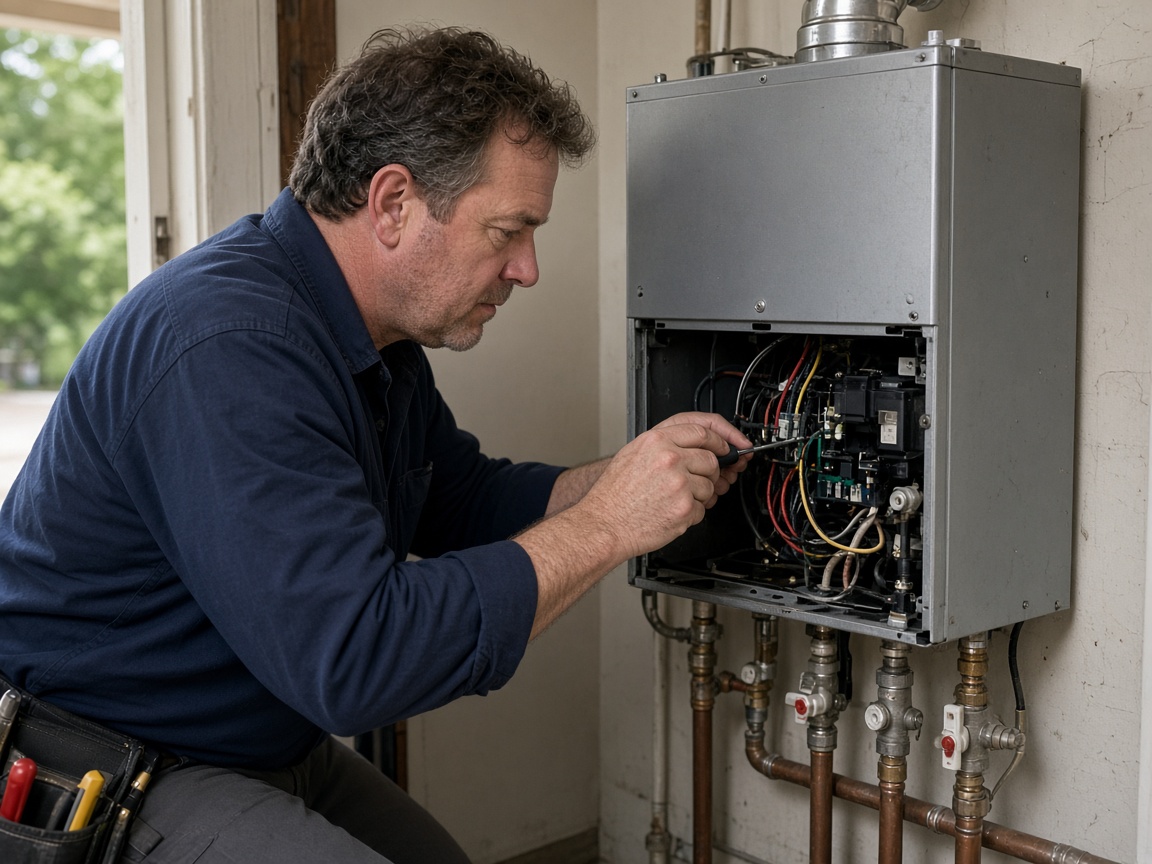
Gainesville's humid subtropical climate brings hot summers that speed mineral scaling inside tankless units, especially in homes built decades ago in Duckpond and University Heights. Water from Alachua County sources often leaves deposits on heat exchangers, reducing efficiency and triggering error codes during peak summer demand. Techs familiar with these conditions start by checking inlet screens and flushing lines before touching electronics, because ignoring buildup here leads to repeated callbacks when temperatures climb again.
Older housing stock around the Florida Museum of Natural History and Magnolia Park frequently pairs tankless units with undersized gas lines or outdated venting that struggles during mild winters when residents still run hot water for showers. A common edge case involves flow sensors misreading due to partial blockages from sediment stirred up after heavy rains near Paynes Prairie. Proper diagnosis requires isolating the unit from the home's plumbing loop to avoid false readings from distant fixtures.
Homeowners near Ben Hill Griffin Stadium and Northwest Gainesville often call after noticing temperature fluctuations tied to high demand periods around University of Florida events. Tankless systems in these areas need specific descaling solutions matched to local water hardness rather than generic products that can damage gaskets. Skipping annual maintenance in this terrain risks voiding manufacturer support and turning a simple flush into a full heat exchanger replacement.
Service calls in Haile Plantation frequently involve units installed during recent builds where installers used flexible venting that sags over time in our humid air. This creates condensation issues that corrode burners faster than in drier nearby cities like Ocala or Lake City. Checking for proper slope and sealing connections prevents these failures before they strand residents without hot water during an unexpected cold snap.
Technician insight
In Gainesville, the thing that catches most people out with Tankless Water Heater Repair is how our hot summers accelerate scaling inside units in older Duckpond and Magnolia Park homes, where sediment from Alachua County water quickly fouls sensors if flushes are skipped.
Inconsistent Flow in Duckpond Residence
Homeowner in Duckpond reported fluctuating temperatures during summer mornings. Inspection revealed heavy scale on the heat exchanger from local water conditions. The unit was isolated, flushed with a matched descaling solution, and the flow sensor was replaced. Consistent hot water was restored without further callbacks.
How it works
- 1
Initial Assessment
Tech arrives at the Gainesville address, reviews error codes, and inspects the tankless unit for visible scaling or venting problems common in Alachua County homes.
- 2
Isolation and Testing
Unit is isolated from the plumbing loop, flow rates are measured, and components like sensors and heat exchangers are tested for issues tied to local water conditions.
- 3
Cleaning and Repair
Heat exchanger is flushed with appropriate solution, faulty parts are replaced, and gas or electric connections are verified against Gainesville code requirements.
- 4
System Verification
Unit is reintegrated, performance is tested across multiple fixtures, and homeowner receives guidance on maintenance to handle summer scaling in this climate.
Pricing
Pricing depends on the specific model, extent of scaling, and parts required; upfront quote provided after diagnosis.